I’ve spent more than a decade working in the sleep products industry, mostly on the retail and product-selection side. That means long days on showroom floors, plenty of late-night comfort-exchange calls, and a front-row seat to what really happens after a mattress leaves the store. I’ve learned pretty quickly that “luxury” is one of the most misused words in this business. Plenty of mattresses look impressive for the first few weeks. Far fewer still feel impressive a year later—and that’s the real test a posh + lavish mattress is expected to pass.
That’s why the posh + lavish mattress line has always stood out to me. Not because it’s expensive—there are plenty of expensive beds—but because it behaves differently over time.
The first thing people notice isn’t softness
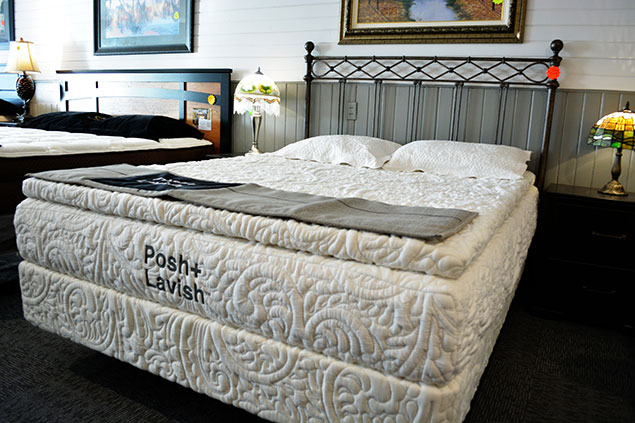 When customers lie down on a posh + lavish mattress for the first time, they usually don’t say “this is soft.” What I hear more often is, “This feels… calm.” That might sound strange, but anyone who’s tested hundreds of mattresses knows exactly what it means. The bed doesn’t push back aggressively, and it doesn’t swallow you either. It feels steady.
I remember a couple who came in last spring after returning two different high-end memory foam beds. Both had felt great for the first month and then slowly turned into hammocks. When they tried a posh + lavish mattress, the reaction was quieter. No big smile, no dramatic comment—just a few minutes of silence, followed by, “This feels supportive without being stiff.” Those are usually the mattresses that age well.
Materials matter more than marketing
One of the biggest misconceptions I see is that a higher price automatically means better comfort. In reality, price usually reflects marketing budgets, not material quality. What separates a posh + lavish mattress is its use of natural latex layers instead of thick stacks of low-density foam. Latex behaves differently under weight. It compresses, then recovers fully—night after night.
I’ve seen this firsthand during warranty inspections. With foam-heavy luxury beds, body impressions show up faster than people expect. With latex-based builds like posh + lavish, those impressions are far less common. When issues do come up, they’re usually related to improper foundation support, not material breakdown.
Who this mattress works best for
In my experience, a posh + lavish mattress works especially well for sleepers who’ve been disappointed by “plush” beds in the past. Side sleepers who need pressure relief but still want alignment tend to do well. So do couples with different sleep styles, because latex responds independently instead of transferring motion across the bed.
That said, it’s not for everyone. If someone wants a deeply sinking, cloud-like feel, I usually steer them elsewhere. Latex has buoyancy. It supports you closer to the surface, and some people mistake that for firmness even when pressure points are well cushioned.
Common mistakes I see buyers make
One mistake I’ve watched people make is pairing a premium mattress with a weak base. A posh + lavish mattress needs a solid, non-flexing foundation to perform as intended. Another is expecting instant familiarity. Latex has a different feel than memory foam, and it can take a couple of weeks for your body to adjust, especially if you’re coming from a very soft bed.
I’ve had customers call after a few nights worried they made a mistake, only to follow up a month later saying their back pain was gone and they hadn’t slept that consistently in years.
What luxury actually means in the long run
Luxury, in my book, isn’t about the first night. It’s about waking up six months later and realizing you haven’t thought about your mattress at all—and that’s a good thing. A posh + lavish mattress doesn’t rely on novelty. It relies on materials that behave predictably over time.
After seeing how different beds hold up in real homes, with real sleepers, that’s usually what separates true luxury from expensive disappointment.
